
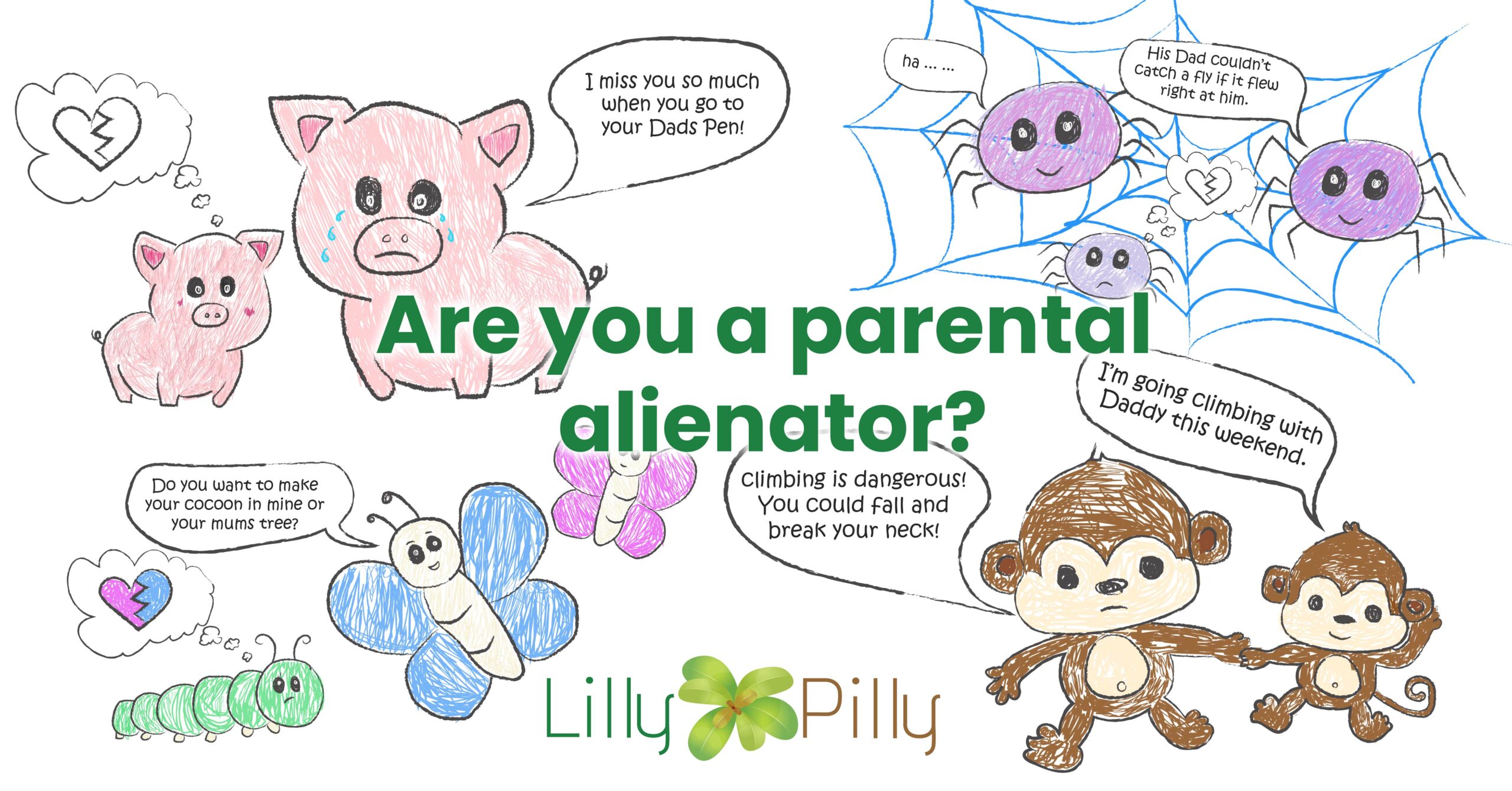
Feelings of anger, resentment, or a desire for revenge are normal post separation. But it’s important that you don’t let your feeling affect the relationship you’re children have with the other parent. It’s easy to become absorbed in our own problems and you may unknowingly become an alienating parent. Intentional or not, parental alienation is child abuse.
So you’re not badmouthing the other parent – You might not be speaking negatively directly to your child, but maybe you are confiding with a friend or family member and your child is within ear shot or possibly someone makes a negative remark about the other parent. Its your job to pull your friends and family aside and talk to them about only having appropriate conversation around your child.
You would never tell your child that the other parent does not love them – But have you ever questioned your child on the other parents short comings or justified your “No” with because of the other parent? “Your Mum wont pay for half, so we can’t afford to get them.”, “I would take you to that party, but its your Dad’s weekend, You’ll have to ask him.”, “Doesn’t Mum buy you canteen food?”, “Why does Dad make you go to bed so early?”, “You only got clothes for your birthday, I thought you asked mum for a phone?”.
You wouldn’t tell your child that the other parent is dangerous – But maybe you have stressed the dangers of motor bike riding, water safety in open water, rock climbing or another activity your child enjoys or is looking forward to doing with the other parent. Your concerns may be genuine, but discussing them with your child is not appropriate, you should discuss these with the other parent.
You have never forced your child to choose between the two of you – Kids have their own opinions and when co-parents can’t agree and are struggling to make decisions, it might seem like a good idea to get the kids involved with making a decisions. The decision may be choosing what high school to go to or how they want to spend their birthday, Seems harmless right? But by getting them involved your asking them to pick a side.
You wouldn’t confide in the your child – You aren’t disclosing what is occurring in the separation or legal proceedings. But being a parent is a complicated job, Have you shared your feelings of depression, loneliness or stress. It could be as simple as saying ‘I’m going to miss you so much when you visit Dad’ .Your problems are adult problems and sharing them with a child makes them feels responsible for you.
A child’s early experiences with their parents shape how they perceive love and relationships later in life. Alienating parents influence a child’s thoughts, feelings, attitudes and/or behaviours toward the other parent that are disproportionate to the child’s actual experience with that parent. So check in with your self and ask “am I being a parental alienator?”
